Dihydroberberine vs Berberine HCl: Dose and Absorption
Is a dihydroberberine supplement better than berberine HCl?
Dihydroberberine absorbs more efficiently, so it can work at a smaller daily dose with less stomach upset. Berberine HCl holds most of the human outcome trials. Delivery form matters as much as the molecule when you set your routine. Compare the form, the dose and how each one sits with your stomach before you decide which one to try.
- Dihydroberberine: better bioavailability, lower typical dose, often gentler on the gut.
- Berberine HCl: the bulk of the human research, usually 500mg two to three times daily.
- Either way, check standardisation and third-party testing before you buy.
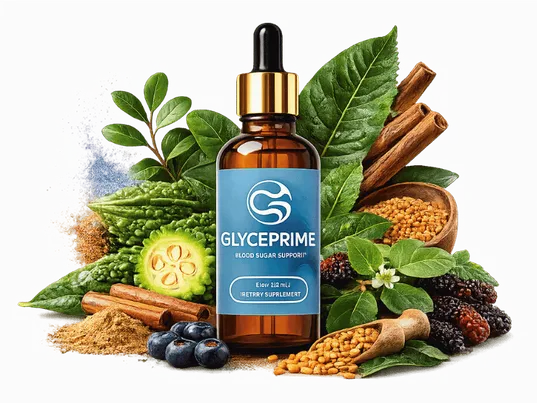
If you have shopped for berberine lately, you have hit the upsell: "regular" berberine HCl on one shelf and a premium dihydroberberine supplement on the next, promising better absorption at a lower dose for a higher price. The pitch is seductive and not entirely wrong — but "not entirely wrong" is exactly the kind of half-truth that separates informed shoppers from people who overpay for a marketing story. This article settles the comparison the way an ingredient-savvy buyer would: form by form, claim by claim, evidence against hype.
The one-line version, before the detail: dihydroberberine really does absorb better, and berberine HCl really does have almost all the research. Which one is "better" depends entirely on whether you value a promising absorption profile or a proven track record. And there is a third factor both camps ignore — the delivery format the compound arrives in — which is where GlycePrime's approach becomes relevant.
The problem both forms are trying to solve
Plain berberine has an awkward flaw: it is poorly absorbed. A large fraction of an oral dose never makes it into the bloodstream, which is one reason the trials had to use fairly hefty amounts (Murakami, Expert Opinion on Drug Metabolism and Toxicology, 2023) — typically 500 milligrams two or three times a day — and one reason so many people get digestive side effects, because the unabsorbed compound lingers in the gut. Every "improved" berberine product on the market is, at heart, an attempt to fix that absorption problem. Understanding that framing makes the whole comparison click into place.
Berberine HCl: the researched default
Berberine hydrochloride is the form that built berberine's reputation. When you read that berberine improved a glucose marker, or supported modest weight change, or nudged cholesterol, the study almost certainly used berberine HCl. That is its entire advantage, and it is a large one: the benefits people actually care about are documented in humans with this form, not extrapolated from a cousin molecule. If your priority is buying something whose effects are proven rather than inferred, HCl is the conservative, defensible pick. Our 2026 guide to choosing the best berberine supplement leans on this evidence base for exactly that reason.
The trade-offs are the flip side of the same coin. It needs a relatively high, split daily dose to overcome poor absorption, and it is the form most associated with the cramping and loose stools berberine is notorious for. Our berberine 500mg dosage guide covers how to structure and ramp it to keep those side effects manageable.
Dihydroberberine: the bioavailability upgrade
Dihydroberberine, often shortened to DHB, is a metabolite of berberine — essentially a form the body would otherwise convert berberine into. Because it is already a step down that path, it appears to be absorbed considerably more efficiently (Moon et al., Nutrients, 2021). The practical implications marketers lead with are real in principle: you may need a smaller dose to achieve a comparable blood level, and a smaller, better-absorbed dose tends to mean less unabsorbed compound irritating the gut, hence fewer digestive complaints.
Typical DHB products reflect this, dosing around 100 to 200 milligrams once or twice a day against the 500 milligrams two to three times daily you see with HCl. On paper, that is a genuinely attractive profile: fewer capsules, gentler on the stomach, same active family.
The catch: absorbed better is not the same as proven better
Here is the sentence the sales pages leave out. Dihydroberberine's advantage is measured mostly in pharmacokinetics — how much gets into your blood and how quickly — not in a deep stack of outcome trials showing it moves glucose or weight in people over time (Wang et al., Food and Chemical Toxicology, 2026). Berberine HCl has that outcome data; DHB largely borrows the expectation of it. Better absorption is a strong reason to think DHB should work well, but "should work well" and "has been shown to work well in humans across many studies" are different tiers of confidence, and an honest comparison keeps them separate.
There is also a quiet dosing uncertainty. Because the exact equivalence between a milligram of DHB and a milligram of HCl is not firmly nailed down, the smaller number on a DHB label is a reasonable expectation of sufficiency rather than a guaranteed match. You are, to a degree, trusting the manufacturer's conversion assumptions.
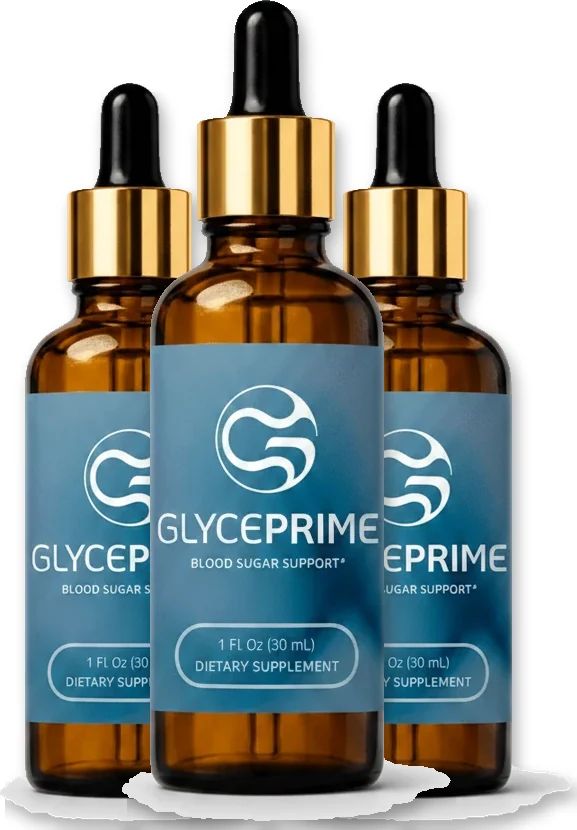
GlycePrime's answer to the absorption problem: a liquid
Rather than a compressed capsule, GlycePrime is a liquid taken under the tongue — a delivery route designed to sidestep some of the absorption hurdles that started the DHB-versus-HCl argument. 60-day money-back guarantee.
See GlycePrime PricingThe factor both camps ignore: delivery format
The entire dihydroberberine-versus-HCl debate is, underneath, an argument about getting more of the compound into your bloodstream. And yet it is usually framed only as a molecule choice, when the format the molecule arrives in matters too. A large compressed capsule that has to dissolve and survive the digestive tract is not the only option. A liquid taken sublingually — held under the tongue — is a different delivery route entirely, and it is the route GlycePrime chose.
That is not a claim that a liquid beats DHB or HCl on a lab absorption test — we have no head-to-head data saying so, and we will not pretend otherwise. It is the more modest, honest point that "which form absorbs best" is a bigger question than "HCl or DHB", and delivery format is a legitimate third answer. For someone who found capsules hard on the stomach or simply inconvenient at three meals a day, a once-daily liquid is a genuinely different way to approach the same absorption problem the whole debate is about.
How to read any berberine label, whichever form you pick
- Standardisation. Look for a stated berberine content and, where relevant, how the extract is standardised. A named amount beats a vague "berberine complex".
- Third-party testing. An independent lab result confirming identity and dose is the strongest signal a brand is not overstating what is in the bottle — doubly important for a pricier DHB product.
- Match the form to your goal. Want the deepest evidence base? HCl. Want lower dose and gentler digestion, and comfortable with less outcome data? DHB. Want to skip the capsule question entirely? A liquid delivery format.
- Mind the price per active. DHB commands a premium; make sure you are paying for absorption you will actually use, not just a novel-sounding name.
- Interaction still applies. Both forms are still berberine and can lower glucose. If you take diabetes medication, this is a prescriber conversation regardless of form. Our overview of a berberine supplement for blood sugar covers that interaction in more detail.
Is the dihydroberberine price premium worth it?
Dihydroberberine almost always costs more per bottle than berberine HCl, and the value question deserves a straight answer rather than a shrug. You are paying for absorption efficiency, which is real, and for the downstream conveniences it buys: fewer capsules and, for many people, a calmer stomach. If either of those solves a problem you actually have — you gave up on HCl because it wrecked your digestion, or you simply will not remember three doses a day — then the premium is buying compliance, and a supplement you keep taking beats a cheaper one you abandon. That is money well spent.
Where the premium stops being worth it is when it is bought purely on the word "bioavailable" with no personal problem to solve. If berberine HCl already sits fine with you and a two- or three-times-daily routine is no burden, you are paying extra for an upgrade whose main documented advantage — getting more compound into the blood — you were achieving well enough with the cheaper, better-researched form. In that case the rational move is to keep the money and keep the evidence base. The premium is a fix for a specific problem, not a universal upgrade.
Two myths worth clearing up
First: "dihydroberberine is stronger than berberine." It is not inherently more potent — it is better absorbed, which is a different property. A lower DHB dose can reach a comparable blood level, but that is efficiency, not raw strength, and the distinction matters when you are comparing labels. Second: "the newer form must be better." Newer means less studied here, not more advanced. In supplements, the form with more human outcome data is often the safer bet precisely because it is older and more scrutinised. Novelty is a marketing asset, not a clinical one.
The verdict
If forced to pick between the two capsule forms: choose berberine HCl when you want the safety of the biggest evidence base and do not mind the higher dose or the digestive risk; choose a dihydroberberine supplement when a lower dose and gentler stomach experience matter more to you than having decades of outcome trials behind the exact molecule. Neither choice is wrong — they optimise for different things. And if the whole capsule-absorption argument is the part you would rather not manage at all, a liquid formula like GlycePrime reframes the question instead of answering it on the industry's terms.
Skip the capsule debate entirely
GlycePrime delivers its blood-sugar botanicals as a once-daily liquid, with multi-bottle bundles that lower the per-bottle price and a 60-day money-back guarantee.
Order NowFrequently asked questions
Is dihydroberberine better than berberine HCl?
Dihydroberberine is marketed as more bioavailable, meaning your body may absorb more of a smaller dose, and early data supports better absorption. But better absorbed is not the same as better proven. Berberine HCl carries the overwhelming majority of the human outcome trials, so it remains the safer choice if what you want is a form with a deep evidence base rather than a promising absorption profile.
Does dihydroberberine need a smaller dose?
Potentially, yes. Because dihydroberberine appears to absorb more efficiently, brands typically dose it lower than berberine HCl, often around 100 to 200 milligrams once or twice a day versus 500 milligrams two to three times daily for HCl. The catch is that the exact equivalence is not firmly established, so a smaller number on the label is a reasonable expectation rather than a guarantee of an equal effect.
Which form causes fewer stomach issues?
Dihydroberberine is often reported to cause less digestive upset, and the logic is sound: a smaller, better-absorbed dose leaves less unabsorbed compound in the gut, which is where cramping and loose stools tend to originate with berberine HCl. Individual tolerance varies, and taking either form with food and ramping the dose gradually both help regardless of which you choose.
Which berberine form has more research?
Berberine HCl, by a wide margin. Almost all of the human trials on glucose, weight and lipids used berberine HCl, so it is the form whose benefits are actually documented in people. Dihydroberberine has promising pharmacokinetic and early studies but nothing like the same depth of outcome data, so its advantage is currently about absorption rather than proven results.
Which berberine form is gentler on the gut?
Dihydroberberine is often gentler on the gut, thanks to better bioavailability and a lower typical dose.
Which berberine form is easier to fit into a daily routine?
Dihydroberberine absorbs more efficiently, so it can work at a smaller dose and is often gentler on the gut, which can make a daily routine easier to keep.
Related reading
References
- Murakami T et al. Approaching strategy to increase the oral bioavailability of berberine, a quaternary ammonium isoquinoline alkaloid: Part 1. Physicochemical and pharmacokinetic properties. Expert opinion on drug metabolism & toxicology, 2023. PMID 37057922.
- Moon JM et al. Absorption Kinetics of Berberine and Dihydroberberine and Their Impact on Glycemia: A Randomized, Controlled, Crossover Pilot Trial. Nutrients, 2021. PMID 35010998.
- Wang D et al. Dihydroberberine in metabolic disorders: Bioavailability, molecular mechanisms, toxicology, and future perspectives. Food and chemical toxicology : an international journal published for the British Industrial Biological Research Association, 2026. PMID 42398618.
- Chromium: fact sheet for health professionals. NIH Office of Dietary Supplements.
- Diabetes and dietary supplements: what the science says. National Center for Complementary and Integrative Health.
- Dietary Supplement Label Database. NIH Office of Dietary Supplements.
- Dietary supplements. U.S. Food and Drug Administration.
- Health products compliance guidance. U.S. Federal Trade Commission.