Gymnema Sylvestre for Blood Sugar: Dose and Research
The short version
Gymnema sylvestre is a blood-sugar botanical with a plausible mechanism and human data behind it. Dose is the key number, and because it can stack with glucose medication, check with your clinician if you take any. Start with the dose printed on the label, and check with a clinician if you take any glucose medication.
- Gymnemic acids blunt sweet taste on the tongue and appear to reduce intestinal sugar absorption — two separate effects, often conflated in marketing copy.
- The interaction that matters is additive: gymnema plus a glucose-lowering medication can push blood sugar lower than either alone.
- GlycePrime publishes no amount for gymnema, which makes the risk and the benefit equally impossible to size from the label.
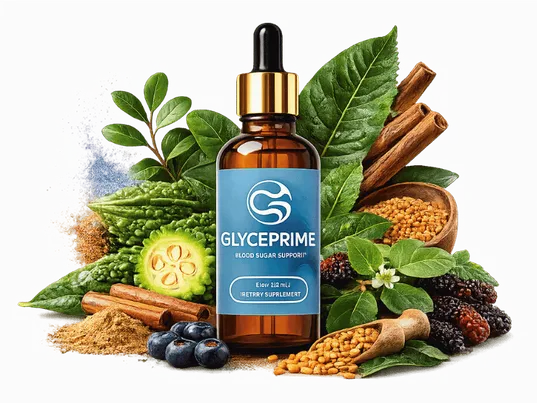
Why this ingredient and not one of the other eleven
GlycePrime lists twelve ingredient entries. Its own three-stage explanation of how the formula works opens with two of them, and the one it leans on hardest is Gymnema sylvestre — the plant Ayurvedic texts call gurmar, roughly “sugar destroyer”. If you want to know whether a blood-sugar formula is serious, the gymnema entry is a reasonable place to look, because gymnema is one of the few botanicals in this category with both a mechanism that makes sense and human data that is not embarrassing.
It is also the ingredient that can hurt you, which is a sentence you will not read on many supplement pages. Those two facts are the same fact seen from different sides, and they lead to the same question, which the manufacturer does not answer.
The two effects, which are not the same effect
Marketing copy for gymnema almost always merges two separate phenomena. Separating them is most of what it takes to read this ingredient properly.
1. It switches sweetness off on the tongue
Gymnemic acids bind to the sweet-taste receptors on the tongue. Chew a gymnema leaf and sugar briefly tastes of almost nothing — sand, texture, no sweetness. The effect is real, immediate, entirely local, and it wears off. It is a taste phenomenon, and it is the reason “sugar destroyer” stuck as a name.
This effect has an obvious behavioural implication — food that does not taste sweet is harder to want — and an equally obvious limitation. It happens in the mouth. It requires the product to contact the tongue, which incidentally is one argument for a sublingual liquid over a capsule. And nothing about it changes a glucose reading on its own.
2. It appears to reduce intestinal glucose absorption
This is the metabolic claim, and it is the one that would actually move a number. The proposed mechanism is that gymnemic acids interfere with glucose uptake in the small intestine, so less arrives in the bloodstream after a meal. Human trials of gymnema extracts have reported improvements in glycaemic measures, generally alongside existing care rather than instead of it, and generally over weeks to months rather than days (Devangan et al., Phytotherapy Research, 2021).
The honest characterisation of that body of work is: directionally consistent, mechanistically plausible, and built on studies that are mostly small. It is not the evidence base of a medication (Zamani et al., Phytotherapy Research, 2023). It is considerably better than the evidence base of most things sold in this category.
The dose is not a footnote here
Every trial that makes gymnema interesting specified how much extract it used, and usually how it was standardised — most commonly to gymnemic acid content. That is not academic pedantry. Two products can both say “Gymnema sylvestre leaf extract” on the label and differ by an order of magnitude in what is actually in the capsule or the dropper.
A concentration ratio does not fix this. GlycePrime describes its gymnema as a 20:1 concentrate, which tells you that twenty parts of raw leaf were reduced to one part of extract. It tells you nothing whatsoever about how many milligrams of that extract are in your daily millilitre. A ratio is a property of the material; a dose is a property of the serving. Only one of them is on the label, and it is the one that cannot be used to compare this product with the research.
GlycePrime publishes a single ingredient amount — chromium picolinate, 7 mcg, 20% of the Daily Value — and gives one combined figure for the herbal blend as a whole. Gymnema is somewhere inside it, in an unstated proportion, alongside ten other entries.
Why the missing number is a safety question, not just a transparency one
For most supplement ingredients, an undisclosed dose is a value problem: you might be paying for a sprinkle. Gymnema is different, because the failure mode is not only “nothing happens”.
A botanical that lowers blood sugar, taken by someone whose medication also lowers blood sugar, produces an additive effect (Yeh et al., Diabetes Care, 2003). Hypoglycaemia is not a mild inconvenience — it is confusion, sweating, shaking, and at the far end, loss of consciousness. The population most interested in a blood-sugar supplement is precisely the population most likely to be on insulin or a sulfonylurea.
GlycePrime's manufacturer states this risk in its own FAQ, which is more than many sellers in this category do, and it deserves credit for that. But the warning and the missing number sit on the same page. A clinician told “my supplement contains gymnema, amount unspecified, inside a blend” cannot advise on monitoring with any precision. That is not a hypothetical inconvenience; it is the practical consequence of an unpublished panel.
How to read any gymnema product, including this one
- Look for milligrams per serving, not a ratio. If the label gives you 20:1 and no weight, you have been told the concentration of something whose quantity is secret.
- Look for standardisation. The better research specifies gymnemic acid content. A product that mentions it is at least speaking the same language as the studies.
- Treat a blend total as one number for many ingredients. A combined figure is compatible with any internal split, including one where the ingredient you care about is a rounding error.
- Ask the seller directly. How many milligrams of gymnema extract are in one serving? A company that formulated the product can answer in a sentence. How it responds is itself information.
- If you are medicated, start the conversation with your prescriber. Not because a supplement is dangerous by default, but because this specific ingredient has a known additive effect and an unknown quantity.
The short version
Gymnema sylvestre earns its place in a blood-sugar formula. The mechanism is real, the human data is genuine if modest, and it is one of the more defensible botanicals anyone could put in a product like this. None of that survives contact with an unpublished dose. Without a number, “contains gymnema” and “contains a useful amount of gymnema” look identical from the outside — and so, more seriously, do “safe to add to my metformin” and “worth a conversation first”.
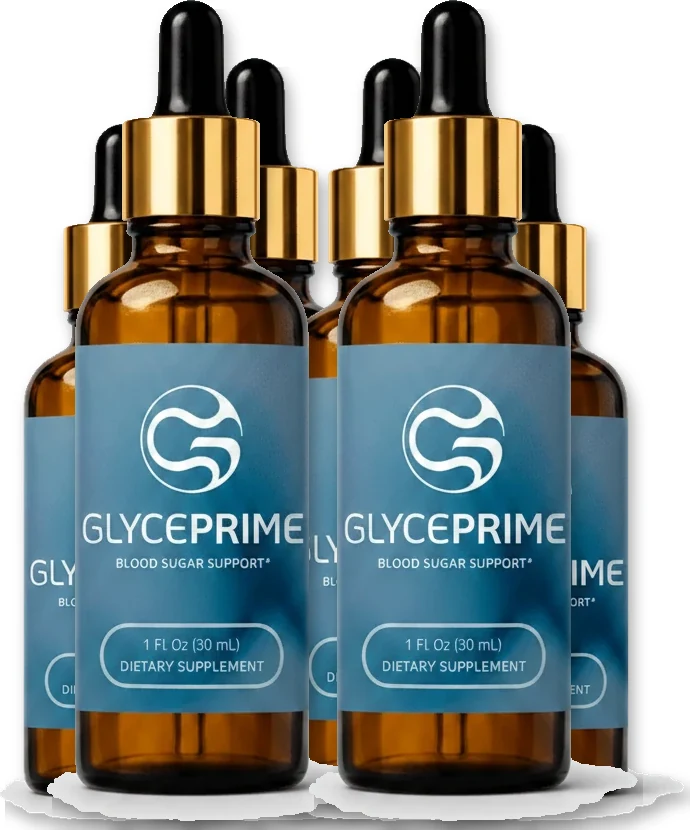
The formula this article is about
GlycePrime leads with gymnema, publishes an amount for chromium instead, and sells in two, three and six-bottle bundles.
Order NowFrequently asked questions
What does gymnema sylvestre actually do?
Two things that are usually run together and should not be. Gymnemic acids bind to the sweet-taste receptors on the tongue, which temporarily makes sugar taste of very little — that effect is immediate, local and well described. Separately, gymnema appears to reduce how much glucose is absorbed in the intestine, which is the effect that would matter to a blood-sugar reading. Only the second one is a metabolic claim.
Can gymnema interact with diabetes medication?
Yes, and this is the single most important thing to know about it. Because gymnema can lower blood sugar, taking it alongside insulin, a sulfonylurea or another glucose-lowering drug can add to that effect and push levels too low. GlycePrime's own manufacturer says exactly this in its FAQ. Anyone on such a medication should be talking to their prescriber and monitoring, not experimenting.
How much gymnema is in GlycePrime?
The manufacturer does not say. Chromium picolinate is the only ingredient it quantifies. Everything else, gymnema included, sits inside one figure the sales page gives for the herbal blend as a whole, and no Supplement Facts panel has been published.
Is a herbal extract ratio like 20:1 the same as a dose?
No, and this is the most common misreading of a supplement label. A ratio describes how concentrated an extract is relative to the raw plant. It says nothing about how much of that extract is in your serving. Twenty parts of leaf reduced to one part of extract is still meaningless as a dose until somebody tells you how many milligrams of that extract you are getting.
How does gymnema sylvestre affect sweet taste?
Gymnemic acids blunt sweet taste on the tongue and appear to reduce intestinal sugar absorption. These are two separate effects.
Should I take gymnema at the same time every day?
A steady daily routine at a disclosed dose is the goal. If you take glucose medication, check with your clinician first.
References
- Devangan S et al. The effect of Gymnema sylvestre supplementation on glycemic control in type 2 diabetes patients: A systematic review and meta-analysis. Phytotherapy research : PTR, 2021. PMID 34467577.
- Zamani M et al. The effects of Gymnema Sylvestre supplementation on lipid profile, glycemic control, blood pressure, and anthropometric indices in adults: A systematic review and meta-analysis. Phytotherapy research : PTR, 2023. PMID 36580574.
- Yeh GY et al. Systematic review of herbs and dietary supplements for glycemic control in diabetes. Diabetes care, 2003. PMID 12663610.
- Chromium: fact sheet for health professionals. NIH Office of Dietary Supplements.
- Diabetes and dietary supplements: what the science says. National Center for Complementary and Integrative Health.
- Dietary Supplement Label Database. NIH Office of Dietary Supplements.
- Dietary supplements. U.S. Food and Drug Administration.
- Health products compliance guidance. U.S. Federal Trade Commission.